
This lesson was released before Agents, Branching, and the CMS update on June 16, 2026. Some UI may differ, but the core concepts still apply.

Benjamin
16:54
Create a custom cursor Component in Framer
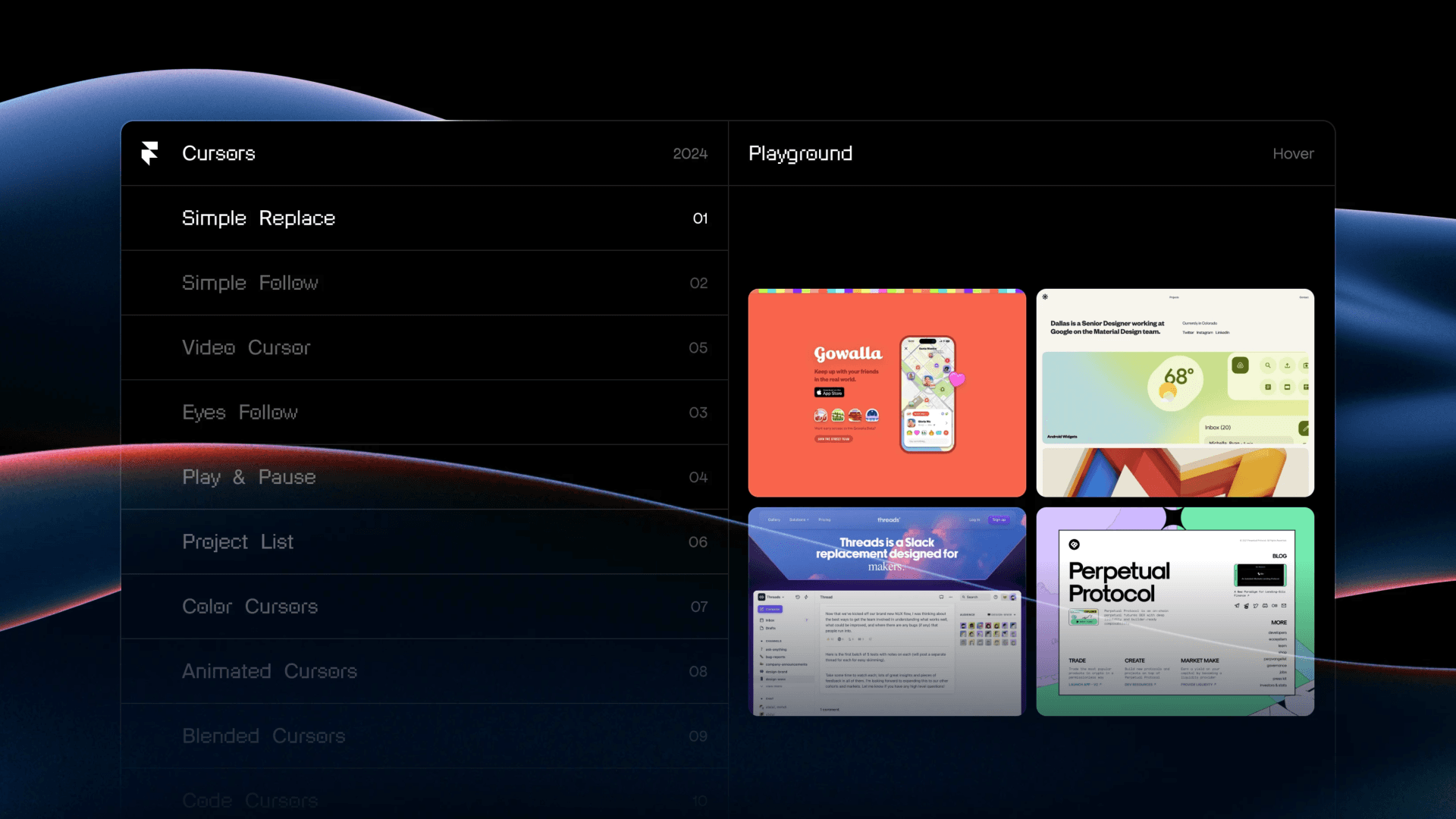
Create a custom cursor in Framer from a Component with interactive Variants. Assign the Component to a page breakpoint, choose whether it follows or replaces the system cursor, and switch Variants on press or hover. Effects and transitions keep the cursor states editable while different page elements can trigger their own labels or visuals.
Lesson details
In this Framer tutorial, you will learn Design interactive cursors with infinite ways to customize. We explain a practical workflow, highlight the key settings that affect the result, and show how to apply the technique on real pages for cleaner UX and better site performance. See Custom Cursors.
Frequently asked questions
How do I add a custom cursor in Framer?
Create the cursor as a Component, select the page breakpoint, and choose the Component from the custom cursor property. Pick its starting Variant and decide whether it follows or replaces the system cursor.
Why build the cursor as a Component?
A Component can contain reusable Variants for default, pressed, and hover-specific states. This keeps the cursor design and its transitions in one editable place.
Can the cursor change over different elements?
Yes. Connect page elements to different cursor Variants so the label, size, or visual treatment changes on hover. The cursor can return to its default Variant when the pointer leaves.
Can a custom cursor animate when clicked?
Yes. Add a pressed Variant and change properties such as scale or fill, then use a transition between the states. Preview the interaction to make sure the feedback remains clear.
Should I use a custom cursor on touch devices?
Touch devices do not use a desktop pointer, so the cursor should not carry essential information. Keep links and controls understandable without it and test the page at phone breakpoints.